
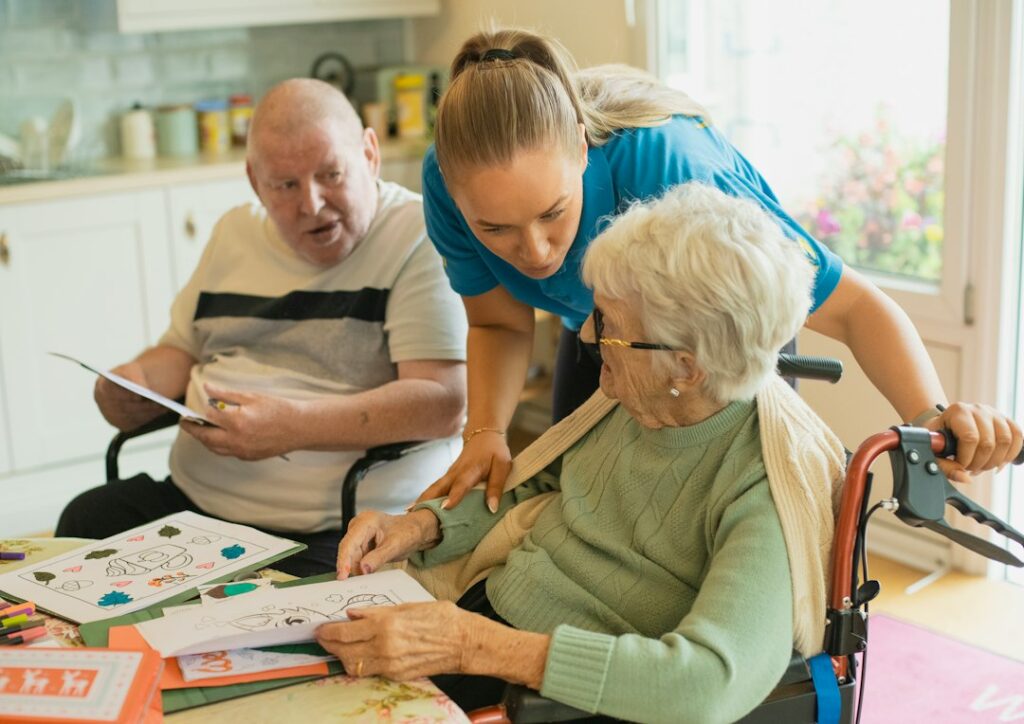
Assisted living staff help residents with daily routines, personal care, health needs, safety, social connection, and communication with families. The goal is to provide appropriate support while preserving each person’s privacy, preferences, independence, and sense of control.
What does assisted living staff do each day?
Assisted living staff provide different levels of assistance depending on a resident’s needs. Support may be occasional, scheduled, or available throughout the day and night.
Common responsibilities include:
- Helping with bathing, dressing, grooming, and toileting
- Assisting residents with walking, transferring, or using mobility equipment
- Supporting medication routines according to applicable care rules
- Preparing meals and helping residents who need dining assistance
- Monitoring changes in health, mood, appetite, or behavior
- Responding to requests for help and urgent concerns
- Keeping living areas and shared spaces safe and orderly
- Offering activities, conversation, and opportunities for social connection
Staff members may include caregivers, medication aides, nurses, activity personnel, dining staff, housekeeping workers, and administrators. Their duties vary according to training, facility policies, and the resident’s service plan.
How do staff support personal care without taking away independence?
Good assisted living support is not meant to do everything for a resident automatically. Staff should encourage residents to complete the parts of a task they can safely manage.
For example, a staff member might lay out clothing, provide reminders, steady a resident while standing, or help with buttons and shoes. The resident may still choose the outfit, wash independently, or complete other parts of the routine.
This approach can help residents maintain strength, confidence, and familiar habits. Assistance should also respect personal preferences, including preferred bathing times, food choices, sleep schedules, cultural practices, and the way a person likes tasks completed.
Residents and families can ask:
- What tasks can the resident do independently?
- What type of help is provided during morning and evening routines?
- How does staff respond if a resident refuses assistance?
- How are changes in ability documented and communicated?
How are health needs monitored?
Assisted living staff commonly observe residents during ordinary activities and report concerns to the appropriate members of the care team. A change may involve reduced appetite, unusual fatigue, confusion, swelling, pain, trouble walking, a fall, or a noticeable change in mood.
Observation is not the same as diagnosing or treating a medical condition. Staff typically follow established procedures for documenting concerns, notifying nurses or supervisors, contacting family members when appropriate, and seeking emergency help when necessary.
Medication assistance may include reminders, storage, observation, or administration by qualified personnel, depending on the medication and applicable rules. Residents and families should ask who is authorized to handle medications, how missed doses are addressed, and how prescription changes are recorded.
A resident’s care needs can change over time. Regular reviews help determine whether current support remains suitable or whether additional services, medical guidance, or a different care setting may be needed.
What happens if a resident falls or has an emergency?
Staff are trained to respond according to emergency procedures. A response may include checking for immediate danger, calling emergency services when needed, providing first aid within the worker’s training, notifying supervisors, and documenting what happened.
After a fall or other incident, staff may monitor the resident for changes and communicate with family members or healthcare professionals. The appropriate response depends on symptoms and the seriousness of the event.
Residents should know how to request help from their apartment or room. Helpful questions include:
- Are emergency call systems available in the bathroom and sleeping area?
- What happens if a resident cannot reach the call device?
- Is staff present overnight?
- How are families notified after an emergency?
- What information should residents provide during an urgent situation?
Seasonal conditions can also affect safety. In Manheim, winter ice, snow, wet entryways, and shorter daylight hours may increase the need for careful footwear, clear walkways, and help with transportation or outdoor mobility. Summer heat can create additional concerns for hydration and safe activity planning.
How do staff support residents with memory loss?
Residents with memory changes may need reminders, consistent routines, clear directions, and extra time to complete tasks. Staff may use familiar schedules, simple choices, visual cues, and calm communication.
A person with memory loss may repeat questions, become confused about time, or feel unsettled in an unfamiliar situation. Arguing or correcting harshly can increase distress. Staff generally aim to acknowledge the concern, offer reassurance, and redirect attention when appropriate.
Helpful support may include:

- Using the resident’s preferred name
- Giving one instruction at a time
- Allowing extra time for responses
- Reducing unnecessary noise and distractions
- Watching for triggers such as hunger, pain, fatigue, or overstimulation
- Communicating changes in behavior to the care team
Memory support should still preserve dignity. Staff should avoid speaking about a resident as though the person is not present and should involve the resident in decisions whenever possible.
How do staff help residents stay socially connected?
Assisted living staff often help residents participate in activities, meals, conversations, and community life. Social support can be especially valuable after a move, a loss, an illness, or a period of isolation.
Participation should not be forced. Some residents prefer small groups, quiet hobbies, visits with family, time outdoors, or one-on-one conversation rather than large events. Staff can help identify activities that match a person’s interests and abilities.
In a community with changing seasons, residents may enjoy indoor gatherings during cold or wet weather and outdoor walks or garden activities when conditions are suitable. Transportation, mobility limitations, hearing loss, and vision changes should be considered when activities are planned.
A resident who withdraws suddenly may be experiencing depression, pain, fatigue, medication effects, hearing difficulty, or another health concern. Staff should treat a major change in social behavior as something worth observing and communicating.
How do staff communicate with families?
Staff communication may include routine updates, incident notifications, care plan reviews, and responses to questions. The resident’s privacy and legal permissions affect what information can be shared.
Families can make communication more useful by providing relevant background, such as:
- A resident’s normal routine and personality
- Food preferences and allergies
- Important medical history
- Communication or hearing needs
- Signs that may indicate pain, anxiety, or illness
- Preferred contacts and emergency information
Families should also share concerns respectfully and specifically. Rather than saying that a resident “seems different,” it can help to describe the change: sleeping more, skipping meals, losing balance, or becoming distressed at a particular time of day.
What should residents expect from respectful staff support?
Residents should expect to be treated with dignity, privacy, patience, and fairness. Staff should explain care before providing it, protect personal information, and respect reasonable preferences. Residents should also have a way to raise concerns without fear of retaliation.
Support may not look identical for every person. One resident may need help only with medications and transportation, while another may require extensive assistance with bathing, mobility, and meals. Clear communication helps ensure that care reflects actual needs rather than assumptions based only on age or diagnosis.
Residents and families can ask for explanations about services, costs, schedules, safety procedures, changes in care, and how concerns are handled. Written care information can be useful, especially when several family members are involved.
Assisted living staff provide the most effective support when they combine practical help with listening, observation, patience, and respect for personal choice. For residents and families, understanding how that support works can make daily care more predictable and help identify changes that deserve attention.
