
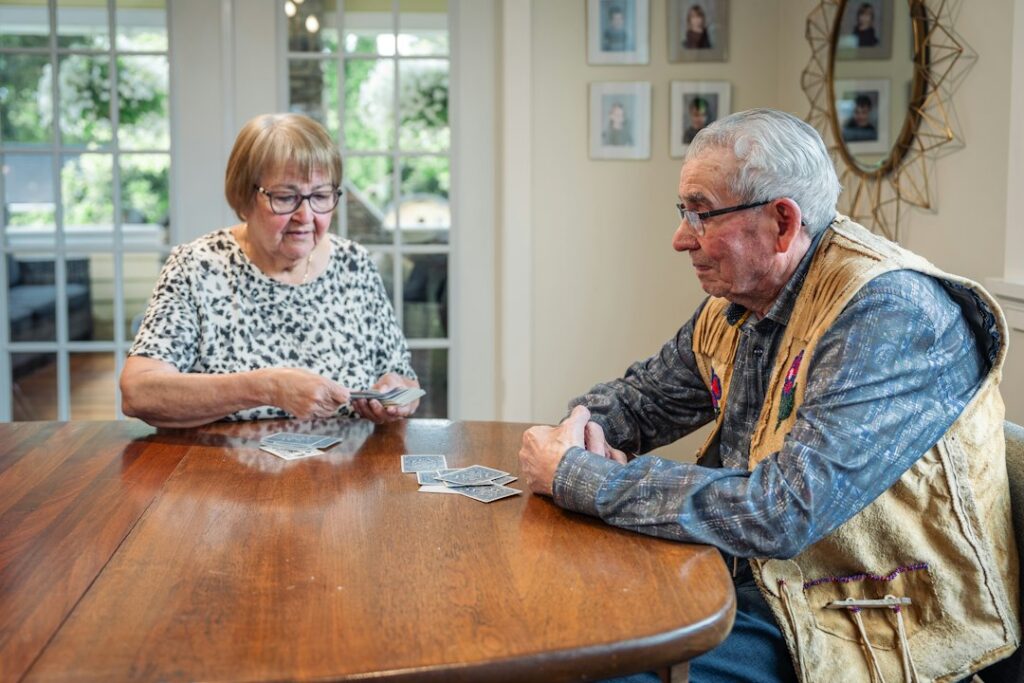
What kinds of activities are offered in assisted living?
Assisted living communities typically offer a mix of social, physical, creative, educational, spiritual, and recreational activities. The goal is not simply to keep residents busy. Meaningful programming can support independence, confidence, mobility, friendships, routine, and emotional well-being.
Common activities may include:
- Group exercise, stretching, balance practice, and walking groups
- Arts and crafts, painting, sewing, music, and other creative projects
- Card games, puzzles, trivia, bingo, and board games
- Book discussions, lectures, current-events conversations, and educational programs
- Movie afternoons, live entertainment, and sing-alongs
- Religious services, meditation, or quiet reflection
- Gardening, seasonal decorating, baking, and household-style activities
- Outings to parks, cultural events, libraries, or community gatherings
- Family events and intergenerational visits
Programs vary from one community to another, and participation should never be judged only by the number of activities listed on a calendar. The quality, accessibility, and personal relevance of those activities matter more.
How do activities support health and daily life?
Recreation can support several areas of wellness at the same time. Light physical activity may help residents maintain strength, flexibility, balance, and confidence with movement. Social activities can reduce isolation and create regular opportunities for conversation. Creative programs may encourage self-expression and provide a sense of accomplishment.
A predictable schedule can also make daily life easier. Residents often benefit from knowing that a familiar activity, meal, exercise period, or social gathering is available at a regular time. This structure may be especially helpful for someone adjusting to a new living environment or coping with memory changes.
Activities are not a substitute for medical care, rehabilitation, or individualized treatment. They are part of the broader daily environment that can help residents remain engaged and connected.
Are activities suitable for residents with different abilities?
They should be. A well-designed program offers more than one way to participate so that residents with different mobility, vision, hearing, memory, or energy levels can take part.
For example, a music program might include singing, listening, rhythm instruments, or simply being present with the group. A garden activity could involve planting, watering, sorting seeds, observing birds, or discussing past gardening experiences. An exercise class may offer seated and standing options.
Residents and families may want to ask:
- Can activities be adapted for wheelchair users or people who tire easily?
- Are instructions provided in a clear, step-by-step manner?
- Can residents with hearing or vision limitations participate comfortably?
- Are quieter alternatives available for people who dislike large groups?
- Can someone join late, leave early, or participate without completing the activity?
- Are staff familiar with safe support during movement-based programs?
A person does not need to participate in every activity to benefit from the recreational program. Personal choice is an important part of dignity and independence.
How can residents choose activities that fit their interests?
Residents should begin with activities connected to their past interests, current abilities, and personal routines. Someone who never enjoyed competitive games may prefer music, conversation, gardening, or a small discussion group. Another resident may enjoy exercise, sports conversations, woodworking-style projects, or community outings.
Families can help by sharing useful background information, such as:
- Favorite hobbies and former occupations
- Preferred music, books, games, or television programs
- Religious or cultural practices
- Comfort level with crowds and unfamiliar people
- Former responsibilities, such as gardening, cooking, teaching, or caring for animals
- Activities the resident has stopped doing because of physical limitations
This information can help staff understand the person beyond a diagnosis or care plan. It may also reveal simple ways to make an activity more familiar and inviting.
What should families look for in an activity calendar?
A calendar should show variety, consistency, and realistic scheduling. It is helpful to look for a balance between group events and quieter options. A full calendar is not automatically a strong calendar if activities are repetitive, poorly attended, or difficult for residents to access.
Consider whether the schedule includes:
- Activities at different times of day
- Indoor options during cold, rainy, or very hot weather
- Opportunities for exercise and movement
- Programs that encourage conversation and friendships
- Creative or purposeful tasks
- Spiritual or reflective activities when appropriate
- Events that include family members
- Time for rest and unstructured personal choice

In Manheim, PA, seasonal conditions can influence recreation. Winter weather may limit outdoor plans, while warmer months can make walking, gardening, and outdoor gatherings more comfortable. An effective schedule should provide indoor alternatives when sidewalks, roads, or outdoor surfaces are wet, icy, or otherwise difficult to use.
Do residents have to attend group activities?
No. Residents generally should be able to decide whether to participate, and declining an activity does not necessarily mean a person is disengaged. Some people prefer one-on-one conversation, independent hobbies, reading, watching familiar programs, or resting.
A resident who repeatedly avoids activities may be expressing fatigue, pain, anxiety, depression, hearing difficulty, confusion, or dissatisfaction with the program. Staff and family members should look for patterns rather than assuming the person is simply uninterested.
Sometimes the best approach is a smaller group, a familiar activity, a shorter session, or personal encouragement from someone the resident trusts. Participation should be invited without becoming pressured.
How do memory-support activities differ?
Residents with Alzheimer’s disease or other forms of dementia may benefit from activities that are familiar, purposeful, and easy to follow. Programs often work best when they focus on the experience rather than a complicated final result.
Examples include:
- Folding towels or sorting household items
- Looking through photographs and discussing memories
- Singing familiar songs
- Matching colors, shapes, or objects
- Simple cooking or baking tasks
- Walking with supervision
- Seasonal decorating
- Sensory activities involving flowers, fabrics, music, or safe food aromas
Activities should be adjusted as abilities change. A task that was enjoyable several months ago may now be frustrating or tiring. Calm guidance, simple choices, and a supportive environment can help preserve a resident’s sense of control.
What questions should residents ask before choosing a community?
Ask to see a current activity calendar and, if possible, observe a program in progress. Useful questions include:
- Who plans and leads the activities?
- How are residents’ interests gathered?
- How often do residents help choose programs?
- What happens when an activity is canceled?
- Are transportation and outdoor activities available?
- How are programs adapted for different abilities?
- Are there activities for residents who prefer small groups?
- How are new residents introduced to activities?
- What options are available for residents who stay in their rooms?
- How are family visits, celebrations, and personal hobbies supported?
The answers can reveal whether recreation is treated as a meaningful part of daily life or merely as a list of events. The strongest programs make room for choice, adaptation, relationships, and ordinary tasks that give residents a reason to look forward to the day.
